---
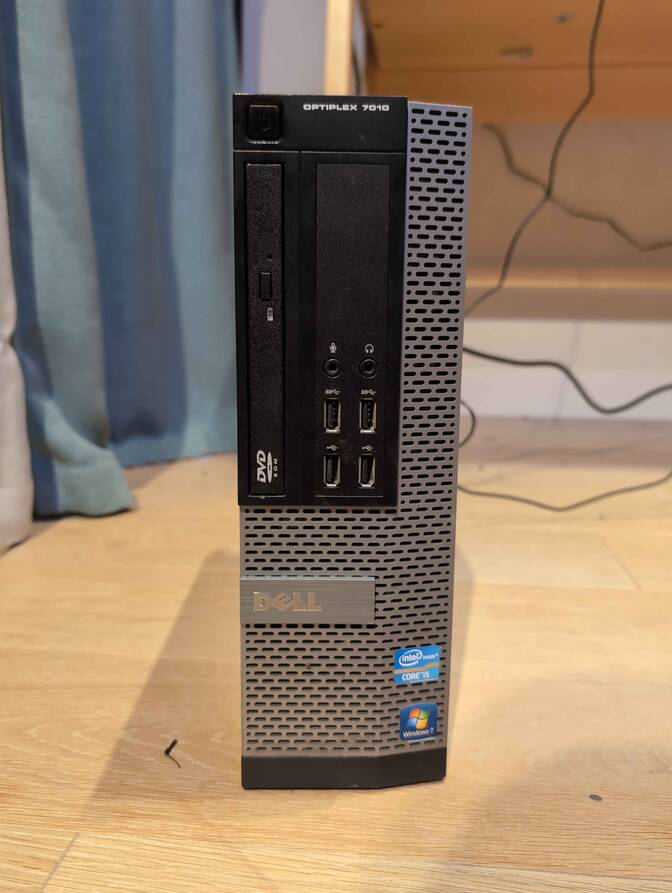
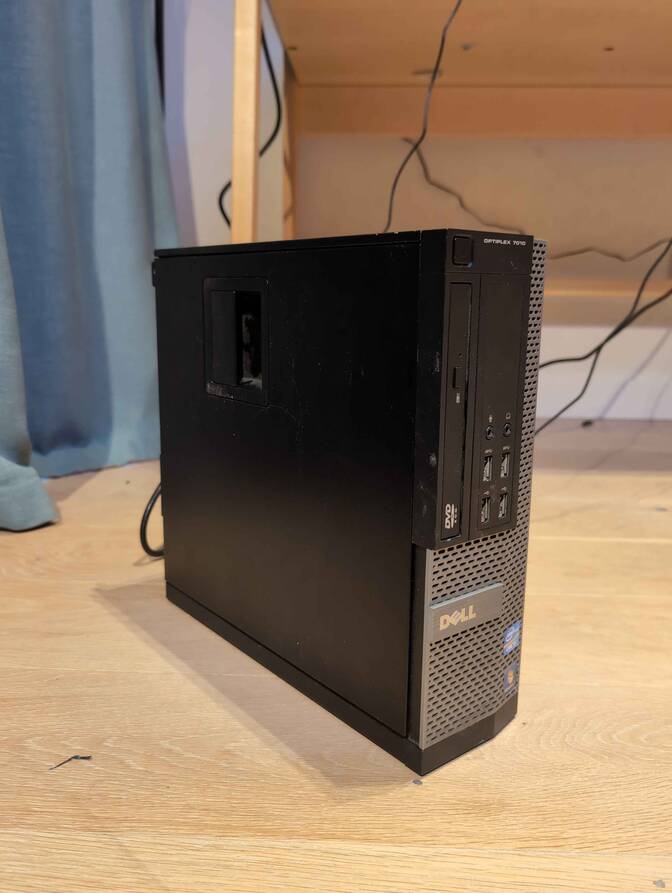
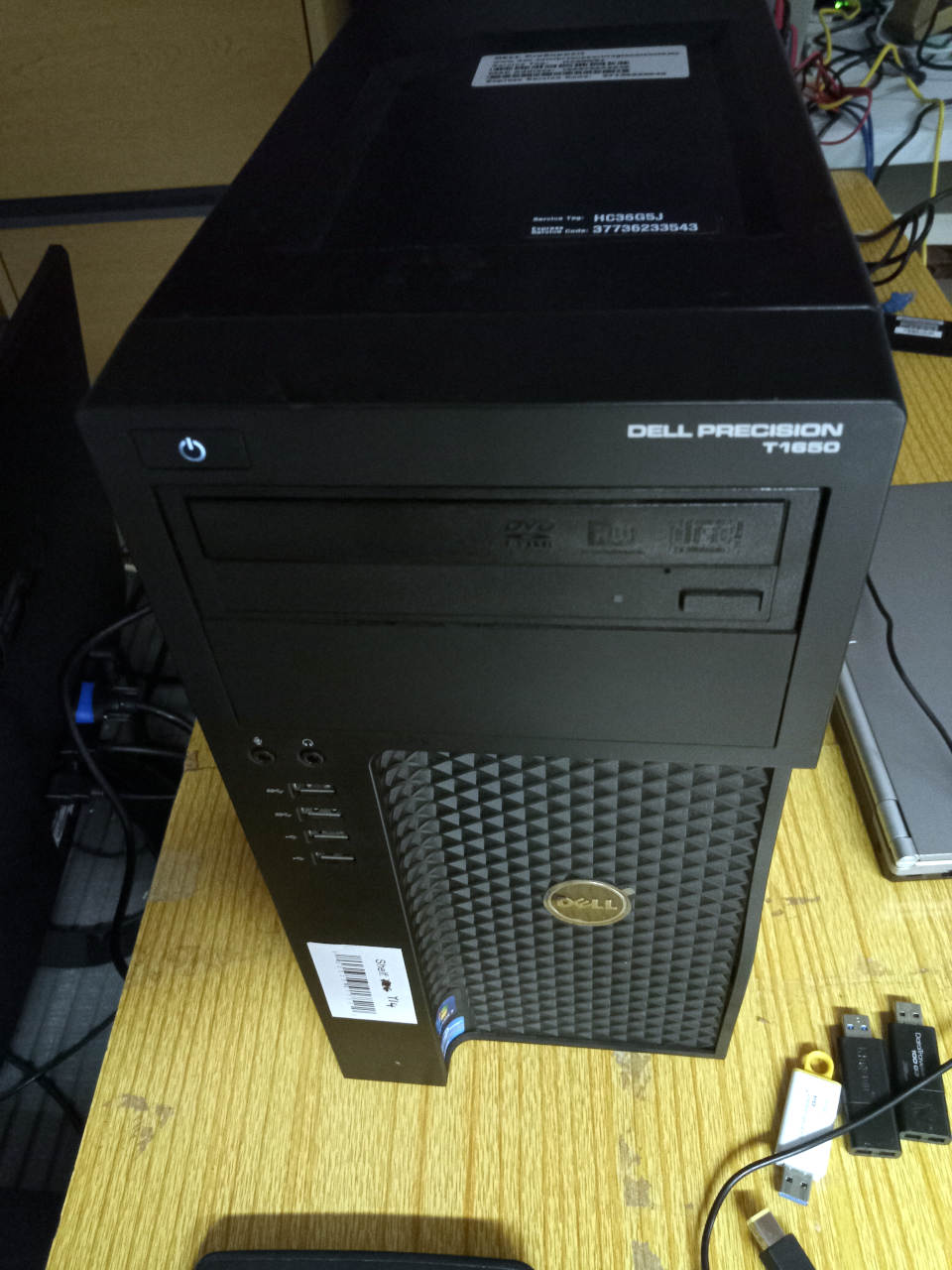
title: Install RBoot on Dell OptiPlex 7010/9010/T1650 SFF/MT
x-toc-enable: true
...
### Get the ROM image
**[Download](../../download.md) from release**
**[Build](../build/) from source**
For the 7010/9010 SFF variants:
./mk -b coreboot dell_optiplex_7010_sff_12mb_uefi
For the 7010/9010/T1650 MT variants:
./mk -b coreboot dell_precision_t1650_12mb_uefi
### Internal/Software Flashing
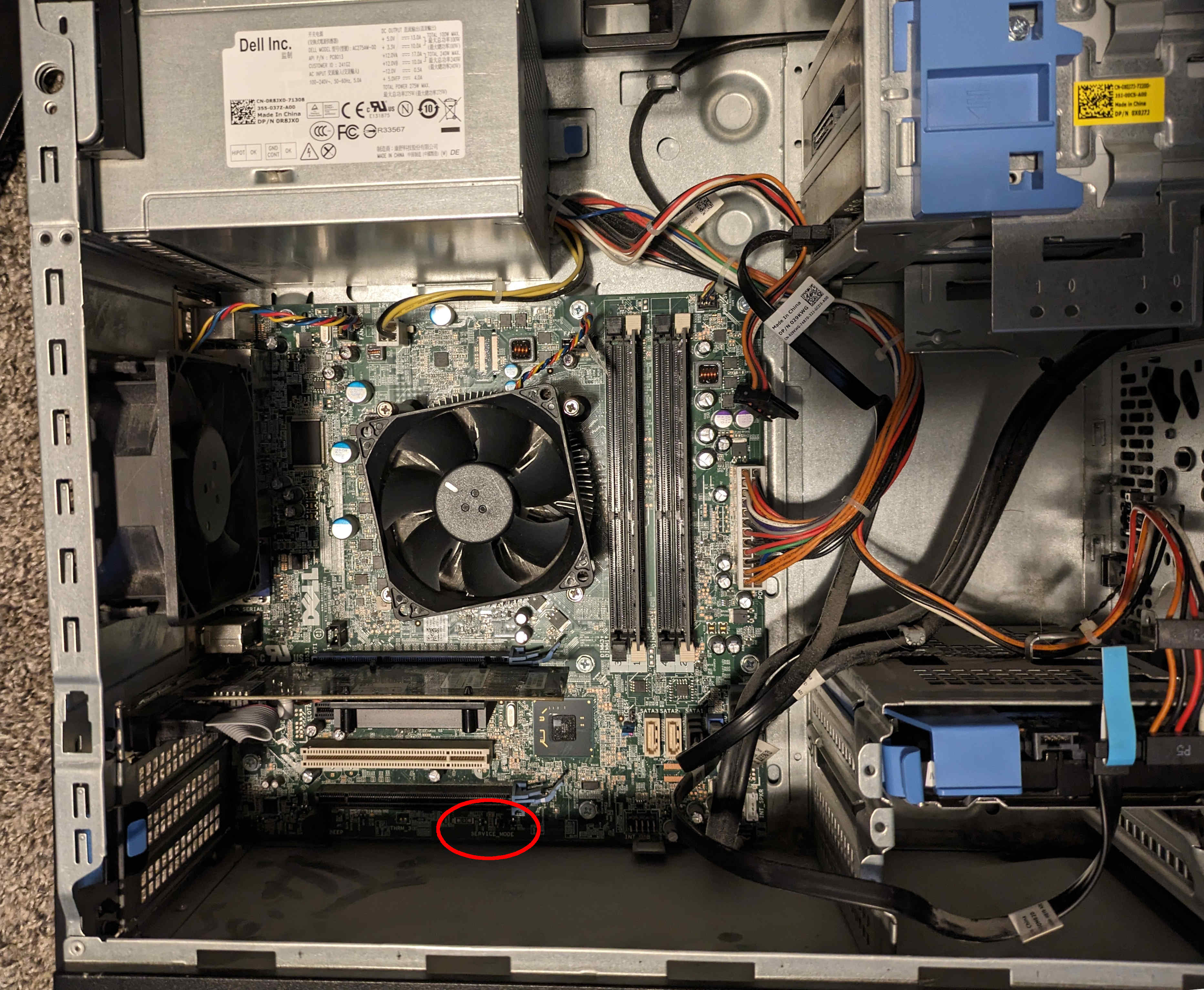
Possible from the factory BIOS, if you set the
service mode jumper. This shorts `HDA_SDO` (Soft Descriptor Override), which
disables the ME after early bringup and disables IFD-based flash protections.
Just short the service jumper when booting and all flash protection is disabled.
**Note: The Dell BIOS can write EFI variables to flash when shutting
down, which could corrupt the newly flashed RBoot ROM and render
the system unusable. To prevent this, after flashing internally from
the original Dell BIOS, remove power from the computer instead of
shutting it down normally. It's recommended to use a live USB instead
of the internal drive to prevent potential filesystem corruption.**
For 7010/9010 SFF:
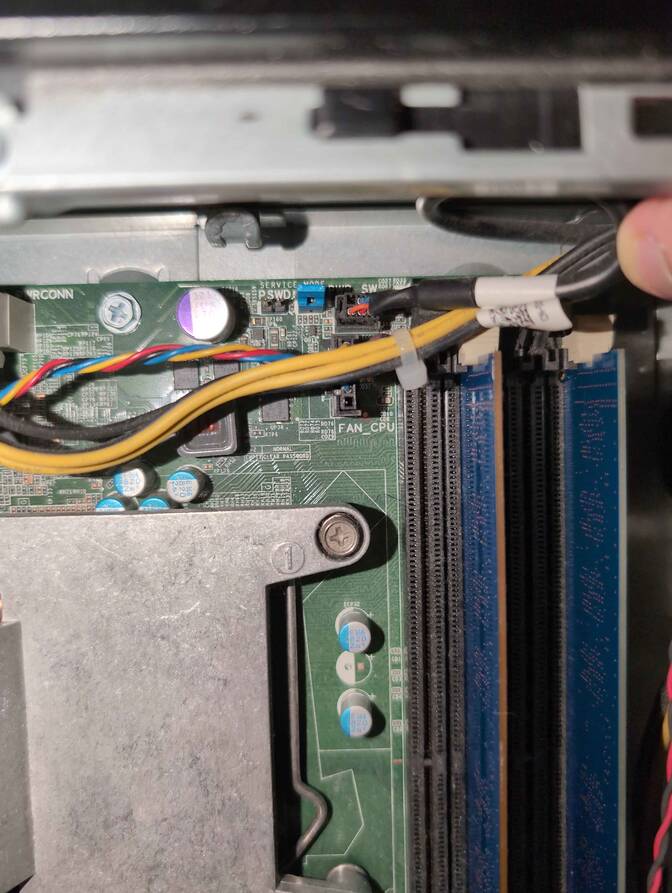
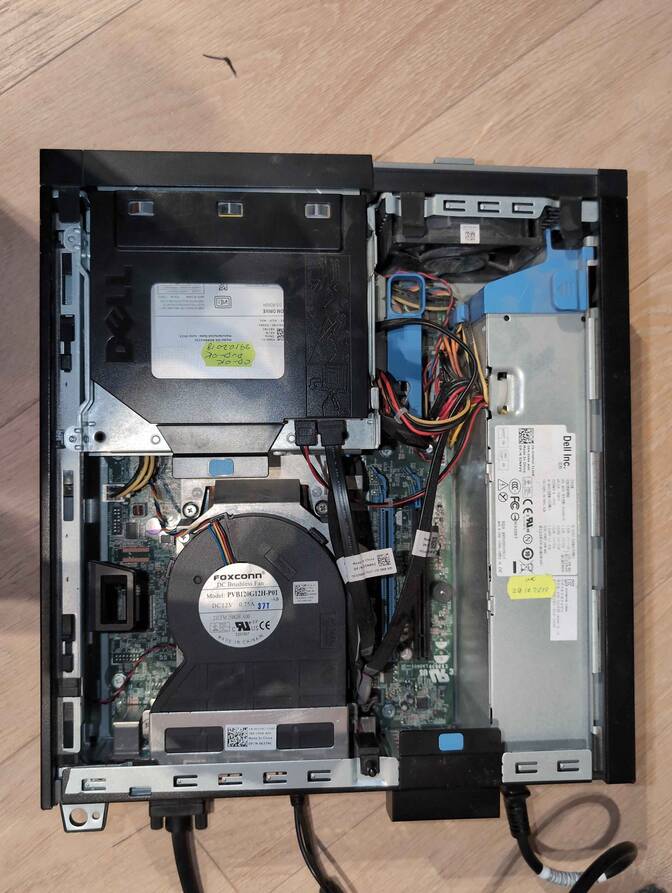 It's near the RAM, under where the HDD goes (click the photos shown above).
For 7010/9010/T1650 MT:
Observe, below the PCI slots:
 Here is a close-up:
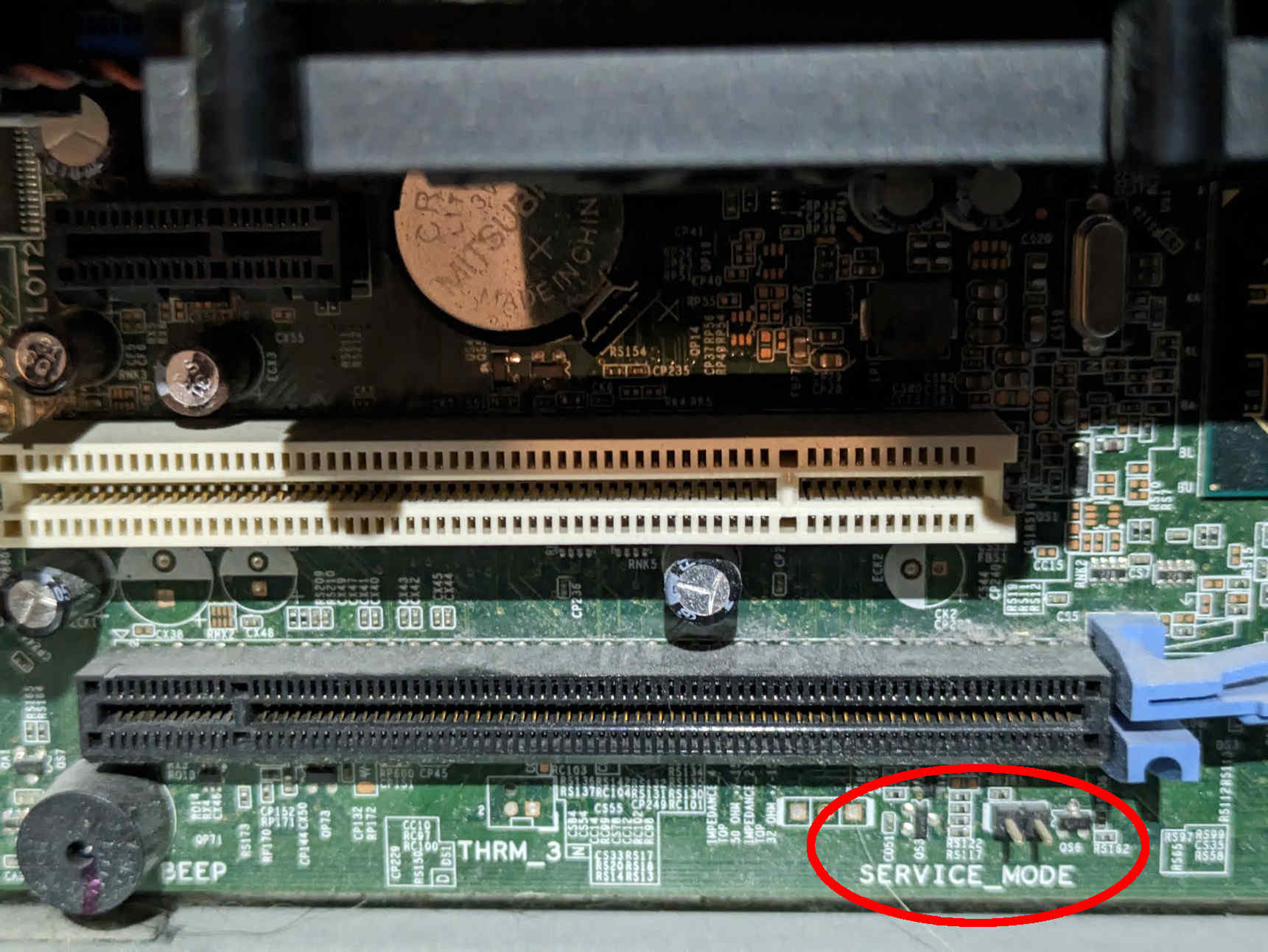 **After the jumper set, follow the [guide](../install/simplified-sw-flashing.md) to backup and flash.**
### External/Hardware Flashing
**REMOVE all power sources and connectors from the machine, before doing this.
This is to prevent short circuiting and power surges while flashing.**
**Check the [hw-flashing guide](simplified-hw-flashing.md) before moving onto the next step below.**
This machine is somewhat cumbersome to flash, because it has a SOIC-16 flash
for the first 8MB part, and 4MB SOIC8. You can split up your 12MB ROM image
like so:
dd if=rboot.rom of=4mb.rom bs=1M skip=8
dd if=rboot.rom of=8mb.rom bs=1M count=8
**Please only flash the IFD and BIOS regions. The CBFS size is 4MB, so you can
just flash the 4MB image to handle the BIOS region, and then use the `--ifd`
option in flashprog to flash just the IFD region in the 8MB chip, for disabling
Intel ME by setting the IFD's HAP bit.**
The side cover comes off easily, and you can find the flash ICs next to the RAM.
No photos yet, but the two flash ICs are next to each other, and near to where
the PCH is.
Flash it: (With rpi-pico as an example, edit the line if needed.)
flashprog -p serprog:dev=/dev/ttyACM0,spispeed=16M -w filename.rom
### Set MAC address
This platform uses an Intel Flash Descriptor, and defines an Intel GbE NVM
region. As such, release/build ROMs will contain the same MAC address. To
change the MAC address, please read [nvmutil documentation](../install/nvmutil.md).
### ECC Memory Support
**(Unregistered) ECC memory works with Pentium/celeron & xeon e3 v1/v2 cpus on T1650 MT only.**
ECC allows for more stable desktop experience (especially for prolonged usage) and ensuring data integrity with error corrections and mitigating certain defects that develop over time in the RAM (it will not account for all defects, and memory always needs to be replaced eventually)
list of [Compatible 3rd gen. Pentium and Celeron](https://en.wikipedia.org/wiki/Ivy_Bridge_(microarchitecture)#Desktop_processors) & [Compatible 3rd gen. Xeons v2](https://en.wikipedia.org/wiki/Ivy_Bridge_(microarchitecture)#Server_processors) & [Compatible 2nd gen. Xeons v1](https://en.wikipedia.org/wiki/Sandy_Bridge_(microarchitecture)#Server_processors)
### Custom Mods
- MT case modification to fit bigger gpu/accelerators
- Power On pin layout if the motherboard is inserted into a non-dell oem tower
[Guide for mods](../../extras.md#dell-7010-9010-t1650-7020-9020-xe2-t1700-probably-other-dell-ones-too)
### Expanded_Specifications
| ***Specifications*** | |
|----------------------------|------------------------------------------------|
| **Manufacturer** | Dell |
| **Name/Variant** | Optiplex 7010/9010 SFF |
| **Released** | 2012 |
| **Chipset** | Intel [Q77](https://en.wikipedia.org/wiki/List_of_Intel_chipsets#LGA_1155) |
| **CPU** | LGA 1155, Intel Ivy Bridge [Core](https://en.wikipedia.org/wiki/Ivy_Bridge_(microarchitecture)#Desktop_processors)+[Xeon E3 v2](https://en.wikipedia.org/wiki/Ivy_Bridge_(microarchitecture)#Server_processors) & Sandy Bridge [Core](https://en.wikipedia.org/wiki/Sandy_Bridge#Desktop_platform)+[Xeon E3 v1](https://en.wikipedia.org/wiki/Sandy_Bridge#Server_platform) |
| **Memory** | DDR3 SODIMMs (max 32GB, 4x8GB) |
| **Graphics** | Intel [HD 4000](https://www.techpowerup.com/gpu-specs/hd-graphics-4000.c1282) (Ivy Bridge) & [HD 3000 1.35Ghz i7+Xeon E3](https://www.techpowerup.com/gpu-specs/hd-graphics-3000.c3196)/[HD 3000 1.1Ghz Core i5 and lower](https://www.techpowerup.com/gpu-specs/hd-graphics-3000.c1257) (Sandy Bridge) |
| **Audio** | Realtek ALC269 HD |
| **Networking** | Intel 82579 |
| **Expansion Slots** | PCIe; 3.0 x16, 2.0; x16 wired in x4 |
| **Storage connectors** | SATA III, 2x SATA II |
| **Other Connectors** | Headers; dual USB 3.0, dual usb 2.0 + audio |
| **I/O Ports on Front** | 2x Line-in (stereo/microphone), 2x USB 3.0, 2x USB 2.0,|
| **I/O Ports on Back** | PS/2 Mouse+Keyboard, VGA, SCOM, 2x DisplayPort, 4x USB 2.0, RJ-45 1GbE (Ethernet), 2x USB 3.0, 2x Line-out (headphone/speaker) |
| ***Specifications*** | |
|----------------------------|------------------------------------------------|
| **Manufacturer** | Dell |
| **Name/Variant** | Optiplex 7010/9010/1650 MT |
| **Released** | 2012 |
| **Chipset** | Intel [Q77](https://en.wikipedia.org/wiki/List_of_Intel_chipsets#LGA_1155) (7010/9010 MT)/[C216](https://en.wikipedia.org/wiki/List_of_Intel_Xeon_chipsets#Single-processor_Ivy_Bridge-based_Xeon_chipsets) (1650 MT) |
| **CPU** | LGA 1155, Intel Ivy Bridge [Core](https://en.wikipedia.org/wiki/Ivy_Bridge_(microarchitecture)#Desktop_processors)+[Xeon E3](https://en.wikipedia.org/wiki/Ivy_Bridge_(microarchitecture)#Server_processors) & Sandy Bridge [Core](https://en.wikipedia.org/wiki/Sandy_Bridge#Desktop_platform)+[Xeon E3](https://en.wikipedia.org/wiki/Sandy_Bridge#Server_platform) |
| **Memory** | DDR3 SODIMMs (max 32GB, 4x8GB), (unregistered) ECC memory supported on T1650 MT |
| **Graphics** | Intel [HD 4000](https://www.techpowerup.com/gpu-specs/hd-graphics-4000.c1282) (Ivy Bridge) & [HD 3000 1.35Ghz i7+Xeon E3](https://www.techpowerup.com/gpu-specs/hd-graphics-3000.c3196)/[HD 3000 1.1Ghz Core i5 and lower](https://www.techpowerup.com/gpu-specs/hd-graphics-3000.c1257) (Sandy Bridge) |
| **Audio** | Realtek ALC269 HD |
| **Networking** | Intel 82579 |
| **Expansion Slots** | PCIe; 3.0 x16, 2.0; x1, x16 wired in x4, PCI |
| **Storage connectors** | SATA III , 3x SATA II |
| **Other Connectors** | Headers; dual USB 3.0, dual usb 2.0 + audio, dual USB 2.0|
| **I/O Ports on Front** | 2x Line-in (stereo/microphone), 2x USB 3.0, 2x USB 2.0,|
| **I/O Ports on Back** | PS/2 Mouse+Keyboard, VGA, SCOM, 2x DisplayPort, 4x USB 2.0, RJ-45 1GbE (Ethernet), 2x USB 3.0, 2x Line-out (headphone/speaker) |
[//]: # "SPDX-License-Identifier: GFDL-1.3-or-later"